IP65 vs IP66 vs IP67 vs IP68: How to Select the Right Protection Rating for Outdoor Lighting
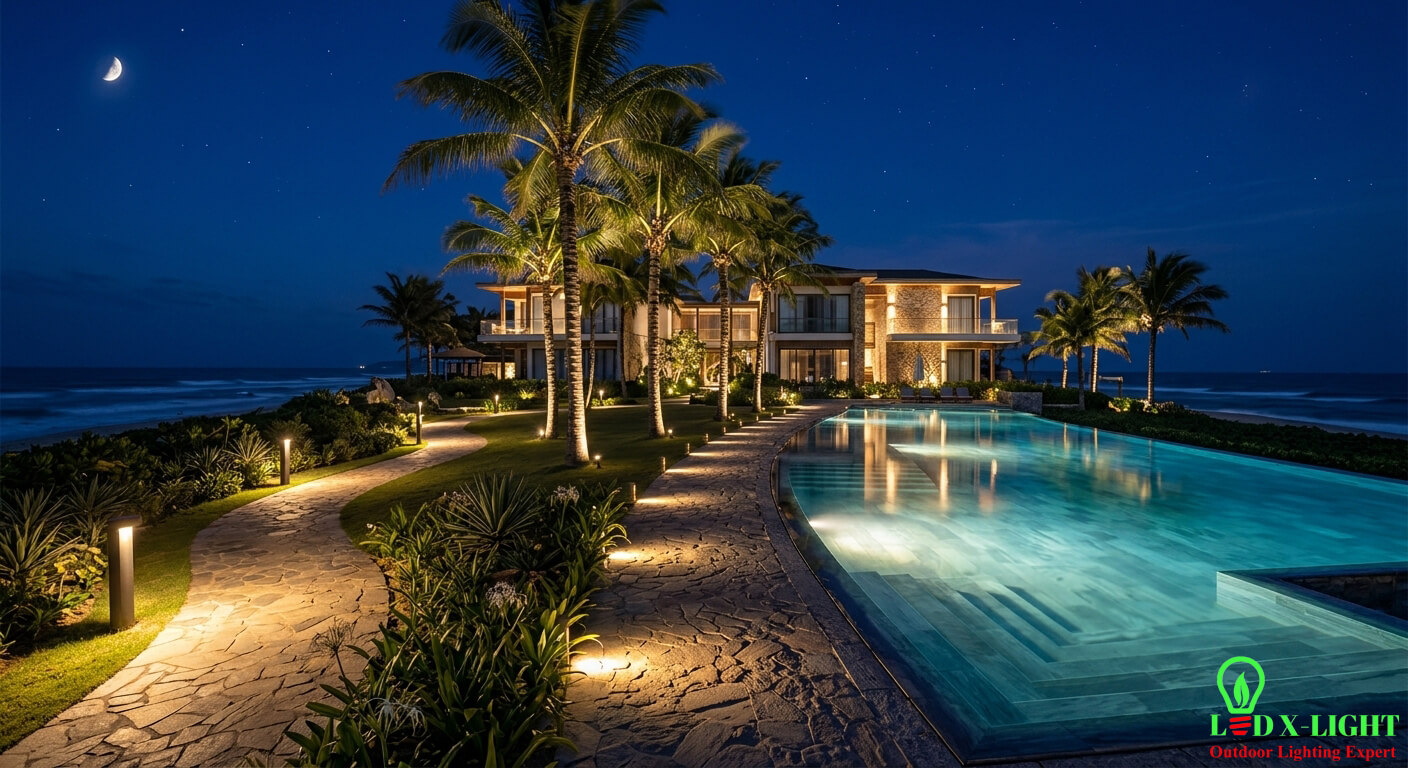
In the discipline of professional architectural outdoor lighting design, specifying the enclosure protection rating of a luminaire is not a mundane administrative detail; it is a critical engineering decision that dictates the functional integrity and operating lifetime of the entire systemic infrastructure. For premium commercial developments—such as
five-star hospitality resorts, luxury hotels, and master-planned urban hardscapes—exterior luminaires must continuously operate under intense environmental stress. These fixtures confront aggressive cloudbursts, severe sub-grade moisture accumulation, high-salinity coastal prevailing winds, and dynamic chemical environments.
However, a prevalent oversight within the preparation of engineering specifications and Bills of Quantities (BOQ) by mechanical and electrical (MEP) consultants and project developers is treating the Ingress Protection (IP) rating system as a simple linear hierarchy. The assumption that a higher IP code automatically signifies a superior quality luminaire, or that an IP68 product is inherently more durable than an IP65 product across all operating contexts, is a severe technical misconception.
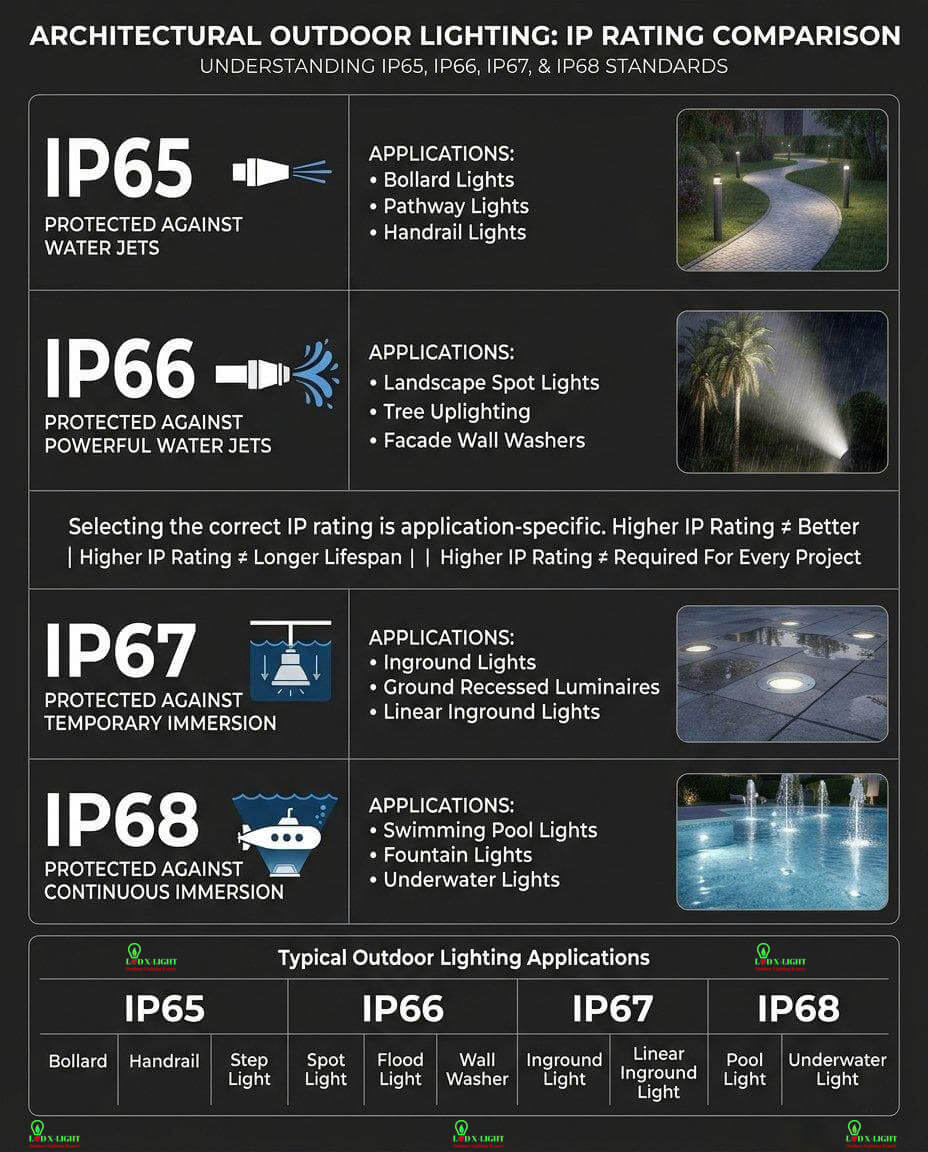
In professional practice, the correct IP rating does not depend on the magnitude of the digits, but rather on the specific lighting application. Selecting the appropriate specification requires an evaluation of the installation location, exposure to water runoff, long-term maintenance strategy, application typography, project budget constraints, and real-world environmental dynamics. Higher IP Rating ≠ Better Product, Higher IP Rating ≠ Longer Lifespan, and Higher IP Rating ≠ Required For Every Project.
What is an IP Rating?
The IP code (Ingress Protection Rating) is an internationally standardized classification framework utilized to quantify the sealing effectiveness of electrical luminaire enclosures against the intrusion of foreign solid bodies and liquid moisture. This technical protocol is codified and governed globally by the International Electrotechnical Commission under the IEC 60529 standard.
The engineering objective behind substituting generic marketing terms like "waterproof" or "dustproof" with precise IP codes is to provide verifiable performance metrics, validated through strict laboratory testing conditions. This system provides architects, MEP consultants, and lighting designers with a uniform technical index to evaluate the physical limitations of an enclosure before deploying hardware to the field.
The Structure of the IP Code per IEC Standards
According to the classification structure established by the IEC 60529 standard, the full designation consists of the "IP" prefix followed by two independent characteristic digits:
• The First Digit: Solid Particle Protection: This digit gauges the degree of protection provided to internal components against the penetration of solid foreign objects and hazardous kinetic bodies, scaling from large items down to microscopic particulates. The indexing ranges from 0 (completely unprotected) to 6 (dust-tight). In professional architectural outdoor specification, this metric must achieve the absolute maximum rating of 6 (Dust-tight):
• Class 5: Dust-protected. Particle ingress is not completely prevented, but penetration cannot enter in quantities that interfere with the safe, unhindered operation of internal electronic circuitry.
• Class 6: Dust-tight. No ingress of solid particulate matter is permissible under continuous negative pressure testing loops.
• The Second Digit: Liquid Ingress Protection: This index quantifies the mechanical defense of the enclosure against fluid moisture entering the internal chambers housing the driver architecture, LED arrays, and optical light engines. The evaluation spans from 0 to 9K (high-pressure, high-temperature washdown jets). For exterior architectural illumination, four distinct tiers serve as key industry baselines:
• Class 5 (Water jets): Protected against streams of water projected by a standard 6.3mm calibration nozzle from any direction against the outer casing.
• Class 6 (Powerful water jets): Protected against high-velocity, high-pressure streams projected by an expanded 12.5mm heavy nozzle from any angle.
• Class 7 (Temporary immersion): Certified to prevent water ingress when submerged in fluid under standardized hydrostatic pressures (up to 1 meter depth) for a fixed testing phase of 30 minutes.
• Class 8 (Continuous immersion): Certified to survive long-term, indefinite submersion in deep water under static hydrostatic pressures, with exact operational conditions defined explicitly by the manufacturer.
Demystifying the IP65 Rating
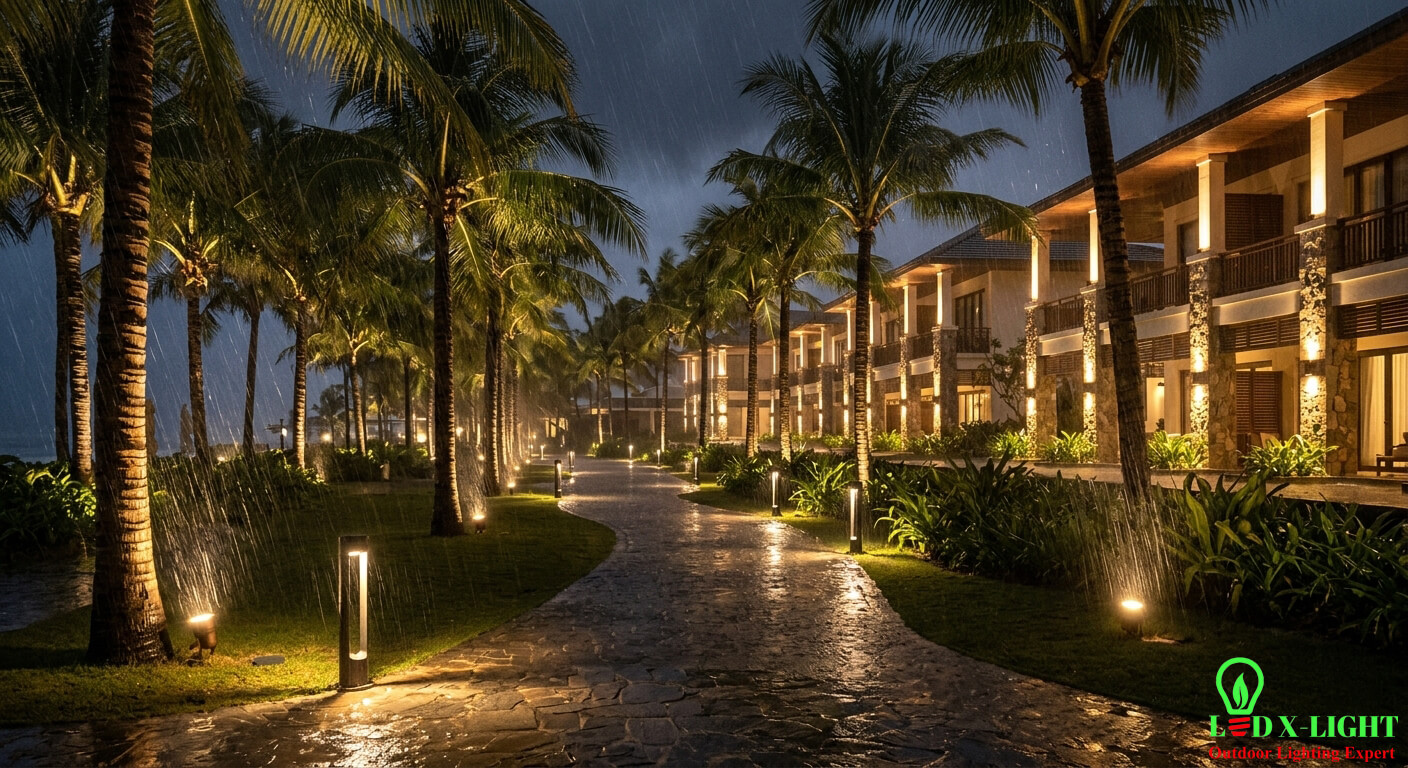
An IP65 compliance certificate indicates that a luminaire's mechanical enclosure is entirely dust-tight (First Digit: 6) and safely protected against low-pressure water streams (Second Digit: 5) projected from any spatial vector. Per the technical criteria of IEC 60529, a Class 5 liquid ingress laboratory evaluation subjects the operating luminaire to a stream from a 6.3mm testing nozzle at a delivery flow rate of 12.5 liters per minute, maintaining a standardized hydraulic pressure of 30 kPa at a distance of 2.5 to 3 meters for a minimum duration of 3 minutes.
IP65-rated luminaires are engineered for above-grade exterior installations exposed to direct rainfall, mountain mists, and heavy ambient humidity, but positioned where natural drainage paths prevent water accumulation:
•
Landscape Spot Lights: Directional accent luminaires deployed above-grade to illuminate ornamental flora and shrubbery.
•
Bollard Lights: Low-profile directional vertical fixtures arranged along pedestrian routes and walkways.
• Pathway Lights: Guided step indicators tracing structural hardscape perimeters.
• Facade Lighting (
Linear Wall Washers): Continuous linear modules installed under architectural building eaves or deep canopy profiles.
•
Outdoor Wall Lights: Surface-mounted exterior sconces treating villa facades.
• Ceiling Downlights: Recessed into open-air entrance canopies and vehicle drop-off zones.
•
Step Lights & Handrail Lights: Integrated directly into concrete balustrades or step risers where water sheds rapidly.
• Flood Lights & Window Lights: High-output luminaires illuminating large zones or contouring structural reveals.
Many professional landscape spot lights engineered with an IP65 rating are widely specified in prestigious landscape lighting projects globally. When these luminaires feature high-performance passive thermal cooling structures, they offer reliable service lifetimes, providing an economical alternative to IP66 fixtures while meeting identical 3-to-5-year engineering warranty requirements. This demonstrates that an IP65 specification does not indicate a product of lower quality.
Demystifying the IP66 Rating
An IP66 designation certifies that the luminaire possesses absolute dust exclusion properties (First Digit: 6) along with the mechanical capacity to resist high-velocity, high-pressure water jets (Second Digit: 6) projected from any orientation without compromising the internal seals. The laboratory testing for Class 6 liquid ingress is significantly more rigorous than Class 5: the operating luminaire is blasted by a stream from an expanded 12.5mm calibration nozzle at an intense delivery rate of 100 liters per minute, with hydraulic pressure increased to 100 kPa from a distance of 2.5 to 3 meters for a minimum duration of 3 minutes.
IP66 protection is engineered for exposed outdoor locations subject to intense driving rain, extreme wind-driven storms, and heavy coastal waves:
• Landscape Spot Lights & Tree Uplighting: Positioned at the base of tall coastal palm trees or beachfront flora, enduring severe wind-driven storms.
• Architectural Spot Lights: High-elevation luminaires mounted on building roofs or structural spires without physical protection.
• Linear Wall Washers & Flood Lights (Exposed): Surface-mounted directly onto high-rise facades to deliver dynamic structural illumination under extreme weather conditions.
However, an IP66 rating does not automatically guarantee a longer product lifespan than a well-engineered IP65 luminaire that features optimal heat dissipation geometry and proper material selections.
Demystifying the IP67 Rating
An IP67 rating signifies an enclosure providing absolute solid exclusion (dust-tight - 6) alongside the capability to maintain total optical seal integrity during temporary fluid immersion (7). The fixture must withstand hydrostatic pressure when submerged under 1 meter of water for a continuous laboratory testing loop lasting 30 minutes. Engineering this standard requires close mechanical tolerances at the interfaces between the structural tempered glass lens and the die-cast metal housing, utilizing high-tensile vulcanized silicone compression gaskets and specialized polymer compound adhesives.
An IP67 specification is generally preferred for luminaires installed flush with paving, concrete, stone surfaces, and landscape hardscape elements. These areas face significant risk from surface water runoff, which can accumulate temporarily during intense downpours before draining:
•
Inground Lights: Ground-embedded fixtures uplighting resort pathways and pedestrian plazas.
•
Ground Recessed Luminaires: Architectural uplights rendering columns and hardscape structures.
•
Linear Inground Lights: Continuous lines of light installed flush along building perimeters or retaining walls where moisture levels remain high.
•
Inground Side Lights: Recessed hardscape fixtures utilizing low-glare side emission optics for pathway orientation.
Demystifying the IP68 Rating
The IP68 classification represents the highest standard for underwater and continuous-submersion luminaire engineering, certifying complete dust exclusion (6) combined with long-term fluid sealing under continuous static hydrostatic pressure (8). The engineering differentiator is that the luminaire must operate indefinitely under precise hydrostatic parameters defined by the manufacturer—typically involving continuous submersion at depths ranging from 1 to 3 meters. The mechanical composition of an IP68 fixture demands exceptional tolerances, using solid marine-grade 316 stainless steel faceplates and chassis blocks to counteract galvanic corrosion under long-term submersion.
Permanent Submersion Applications:
•
Pool Lights: Recessed directly into concrete pool shells, engineered to endure continuous immersion and pool-sanitizing chemicals.
•
Fountain Lights &
Underwater Spot Lights: Deployed within architectural water features and ecological lagoons, resisting constant kinetic water forces.
Specialized IP68 inground lights also exist and can be specified for exceptional waterproofing requirements, such as low-elevation zones prone to prolonged flooding or high water tables. However, these products should only be recommended when required by environmental conditions. For most standard landscape applications, IP67 remains the industry-standard solution.
Technical Comparison Matrix: IP65 vs IP66 vs IP67 vs IP68
| IP Rating |
Dust Exclusion (1st Digit) |
Fluid Ingress Protection (2nd Digit) |
Optimal Project Deployments |
Structural Advantages |
Mechanical Limitations |
| IP65 |
Absolute (Class 6) |
Protected against low-pressure water streams from any angle |
Pathway bollards, handrail lights, step lights, open canopy downlights |
High passive thermal management, optimized cost efficiency for dry zones |
Vulnerable to pooling water; cannot withstand hydrostatic pressure |
| IP66 |
Absolute (Class 6) |
Protected against high-velocity, high-pressure water jets |
Tree uplighting, exposed floodlights, architectural facade projectors |
Exceptional resistance to severe wind-driven rain and driving storms |
Not rated for immersion; demands tight mechanical compression tolerances |
| IP67 |
Absolute (Class 6) |
Protected against temporary immersion (up to 1m depth for 30 mins) |
Inground lights, ground recessed luminaires, linear inground profiles |
Tolerates transient flooding and heavy surface runoff accumulation |
Not rated for permanent immersion; requires an engineered gravel drainage matrix |
| IP68 |
Absolute (Class 6) |
Protected against continuous submersion under static fluid pressure |
Swimming pool lights, fountain spotlights, submerged aquatic fixtures |
Engineered for indefinite deep submersion; superior chemical resistance |
Requires specialized resin-filled cable pots and IP68 connectors; higher cost tier |
 Why Higher IP Ratings Are Not Always Better: The Over-Specification Risk
1. Higher IP Rating ≠ Better Product: The IP code evaluates enclosure seal sealing against external elements; it provides no indication of optical performance, spectral quality, chip rendering fidelity, or driver stability. An IP68 fixture utilizing low-grade internal electronics will still suffer from lumen depreciation and color shifting.
2. Higher IP Rating ≠ Longer Lifespan: Proper LED lifespan relies on Thermal Management. Submersible IP68 luminaires are engineered to dissipate operational heat directly into the surrounding water. Operating an underwater IP68 fixture in an above-grade dry landscape application can cause rapid thermal buildup, accelerating LED degradation and shortening its lifespan.
3. Higher IP Rating ≠ Required For Every Project: Over-specifying IP68 adds unnecessary costs to project budgets. Building an IP68 fixture requires precision-machined heavy metals, factory-molded underwater cables, and specialized potting compounds, inflating equipment costs compared to well-engineered IP65/IP66 architectural luminaires.
Engineering Rationale: Why Premium Landscape Spot Lights Utilize IP65/IP66
When examining the technical specifications of premier global architectural lighting manufacturers from European, engineers often observe that their high-end landscape spotlights (Projectors) are rated at IP65 or IP66. This choice is guided by clear technical principles:
• Optimized Air Convection and Heat Dissipation: Above-grade spot lights dissipate heat into the air. An IP65 or IP66 configuration allows designers to use deep exterior cooling fins and integrated pressure equalization valves. This ensures efficient thermal exchange with the surrounding air, keeping the LED junction temperature within safe limits to protect chip longevity.
• Prevention of Internal Condensation: A sealed enclosure with no air exchange can suffer from internal moisture accumulation due to the thermal expansion and contraction cycles of daily operation. Premium IP65/IP66 luminaires from
LED X-LIGHT incorporate breathable Gore-tex valves, allowing air molecules to equalize pressure while preventing liquid water entry, eliminating lens condensation issues.
• Optical Flexibility and Field Adjustment: Above-grade accent lighting requires field adjustments (Tilting/Panning) and the installation of optical accessories like honeycomb louvers, framing attachments, or color-correcting lenses. The mechanical joints of IP65/IP66 housings allow for straightforward field aiming compared to the sealed, potted structures of submersible IP68 equipment.
Comparative Analysis: Ingress Protection (IP) vs Impact Resistance (IK)
To deliver a reliable outdoor lighting installation, specifiers must combine both ingress sealing protection (IP Rating - IEC 60529) and mechanical structural impact resistance (IK Rating - IEC 62262).
• IP Rating: Evaluates the effectiveness of the luminaire enclosure seals against the intrusion of solid particles and liquid moisture.
• IK Rating: Quantifies the kinetic energy force the faceplate and lens can withstand without structural failure, measured in Joules (J), scaling up to IK10. The standard IK hierarchy includes key milestones:
• IK08 (5 Joules Impact Force): Withstands a 1.7kg mass dropped from a height of 29.5cm. Suitable for standard landscape wall luminaires.
• IK09 (10 Joules Impact Force): Withstands a 5kg mass dropped from 20cm. The minimum standard for standard pedestrian plazas.
• IK10 (20 Joules Impact Force): The maximum industrial rating, enduring a 5kg mass dropped from 40cm.
Within ground-recessed applications (Inground Lighting), the mechanical IK rating protects the integrity of the IP seal. If an inground luminaire has low impact resistance (below IK09), the weight of passing resort golf carts or heavy maintenance equipment can crack the faceplate or distort the housing. This physical deformation misaligns the internal silicone gaskets, compromising the IP67 waterproofing seal and allowing surface water runoff to flood the internal electronics.
Material Engineering: The Role of 316L Stainless Steel in Aggressive Environments
Beyond laboratory ratings, the chemical composition of a luminaire's material dictates its actual field service life, especially in high-salinity coastal environments.
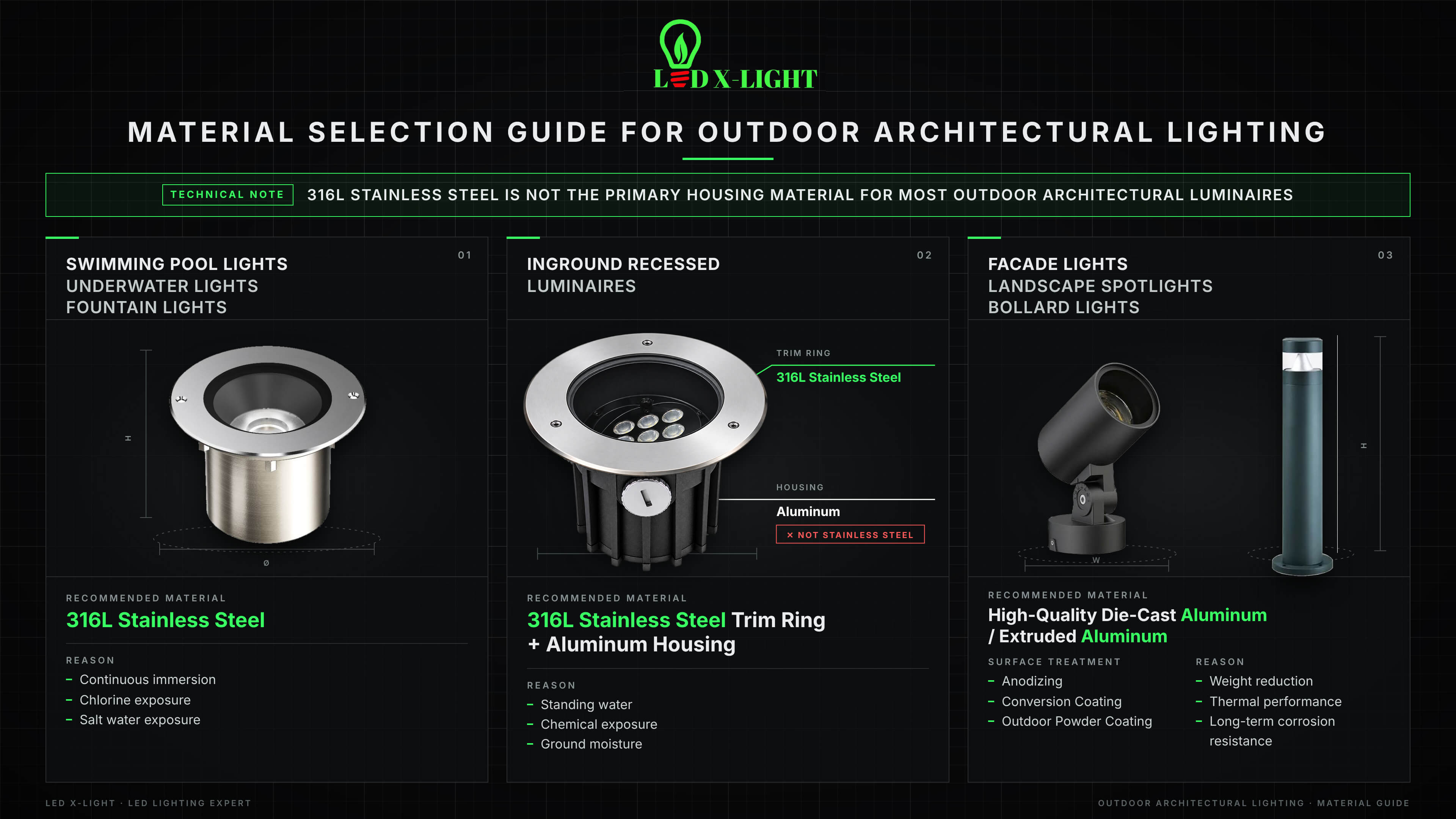
For the exposed components of inground uplights, underwater pool luminaires, and adjustable spot light hardware, material selection is critical. Standard stainless steel (such as 304 grade) provides reliable rust protection in inland areas. However, when exposed to continuous chloride concentrations—found in sea mists or swimming pool sanitizing chemicals—304 stainless steel is highly susceptible to pitting corrosion and crevice attack, leading to surface degradation that compromises luxury hospitality aesthetics.
To address these challenges, professional specifications mandate Marine-grade 316L Stainless Steel. The "L" designation signifies a low carbon threshold (under 0.03%), complemented by the integration of Molybdenum (2%–3%) within the alloy matrix. This chemical composition provides distinct mechanical and chemical advantages: Absolute resistance to chloride-induced pitting and crevice corrosion, high structural yield strength under compressive loads, and long-term structural aesthetics under intense solar UV exposure.
Mandatory Technical Specification: LED X-LIGHT utilizes 316L stainless steel for exposed stainless-steel outdoor lighting components to provide enhanced corrosion resistance in coastal, hospitality and resort environments.
Application-Specific Luminaire Specification Framework for Luxury Developments
1. Architectural Facade Illumination: Luminaire Class includes linear wall washers, high-output narrow-beam projectors. Recommended Specification is IP66 to withstand wind-driven rainfall on high-elevation structures and surface sheet runoff along building envelopes.
2. Pedestrian Path & Orientation Illumination: Luminaire Class includes landscape bollards, pathway markers, surface wall sconces. Recommended Specification is IP65 to offer efficient heat dissipation and optimized equipment procurement costs for above-grade zones free from pooling risks.
3. Hardscape Inground Uplighting: Luminaire Class includes
ground-recessed uplights, linear hardscape profiles. Recommended Specification is IP67 paired with IK10 impact resistance to protect internal electronics from temporary pooling water during storm events, while supporting vehicular axle weights.
4. Submerged & Aquatic Environments: Luminaire Class includes recessed pool lights, fountain spotlights. Recommended Specification is IP68 engineered with marine-grade 316L stainless steel housings, paired with safe SELV 24V DC remote transformer topologies.
❓ FREQUENTLY ASKED QUESTIONS (FAQ)
• Q1: Is an IP65 rating sufficient for professional landscape spot lights?
• Answer: Yes. An IP65 rating is appropriate and highly efficient for above-grade landscape spotlights installed in elevated planter beds or well-drained turf areas. Leading international architectural lighting manufacturers specify many premium projectors at IP65 because the configuration supports reliable passive air convection cooling, protecting LED chip life while optimizing project procurement costs.
• Q2: Does an IP66 rating signify a superior luminaire compared to an IP65 model across all outdoor applications?
• Answer: An IP66 rating indicates greater mechanical resistance to high-pressure, high-velocity water jets, making it necessary for exposed building facades or coastal shorelines. However, it does not mean the luminaire will deliver a longer operating lifespan or higher spectral fidelity than an IP65 fixture configured with proper thermal management and high-grade materials.
• Q3: Should inground lights be specified as IP67 or IP68 for standard resort paths?
• Answer: The standard specification for professional inground uplighting is IP67 paired with IK09 or IK10 impact resistance. This protects internal components against temporary surface water accumulation during heavy rainfall. IP68 ground fixtures are reserved for environments subject to prolonged submersion from high water tables, and using them in standard hardscapes introduces unnecessary equipment costs.
• Q4: Can an IP67 luminaire be submerged permanently inside a commercial swimming pool?
• Answer: No. An IP67 rating is only laboratory-tested for temporary immersion lasting up to 30 minutes at a maximum depth of 1 meter. Submerging an IP67 fixture permanently inside a pool shell exposes it to continuous hydrostatic pressure that will bypass the silicone gaskets, leading to fluid ingress and electrical failure within days.
• Q5: Why do five-star resort developments utilize a large volume of IP65-rated luminaires?
• Answer: This choice follows the principle of application-specific luminaire matching. For above-grade applications like entrance canopy downlights, open-air corridor sconces, and pathway bollards, IP65 fixtures from
LED X-LIGHT deliver reliable protection. This allows developers to allocate project budgets efficiently rather than over-specifying above-grade equipment.
• Q6: What is the metallurgical difference between 316L and 304 stainless steel?
• Answer: 316L stainless steel contains a low carbon threshold (under 0.03%) and includes 2%–3% Molybdenum within its alloy matrix. This addition provides superior resistance to chloride-induced pitting and crevice corrosion from saltwater mists and pool chemicals—conditions that can cause standard 304 steel to degrade.
• Q7: Can a high Ingress Protection (IP) rating substitute for an Impact Resistance (IK) code?
• Answer: No. They measure independent physical characteristics. The IP rating measures enclosure sealing performance against solids and liquids, while the IK rating measures structural resistance against mechanical impacts. An inground fixture can have high waterproof sealing (IP67), but if its structural impact rating is low, passing vehicular weight will crack the glass lens, compromising the seals and leading to water ingress.
• Q8: How can engineers prevent internal moisture condensation underneath the glass lens of outdoor luminaires?
• Answer: Internal condensation occurs due to temperature differentials between the warm internal air of an active luminaire and the cold, damp soil around it, which creates a vacuum that draws in moisture through unsealed cable entry joints.
LED X-LIGHT addresses this by integrating mechanical pressure equalization valves that allow air expansion while blocking liquid water entry.
• Q9: What is the safety benefit of utilizing a remote 24V DC low-voltage electrical topology for landscape lighting?
• Answer: The primary benefit is absolute public safety. In resort pathways and pool decks, guests frequently walk barefoot. Utilizing a Safety Extra-Low Voltage (SELV) 24V DC distribution ensures there is no risk of dangerous electrical shocks even if sub-grade cables suffer physical damage during landscape maintenance.
• Q10: Why do some high-IP outdoor luminaires fail after their first severe storm season?
• Answer: Most field failures stem from installation and sub-grade engineering errors rather than luminaire manufacturing defects. Common issues include failing to provide a gravel drainage bed beneath an inground fixture's mounting sleeve (subjecting an IP67 light to long-term immersion) or using standard electrical tape instead of IP68 resin-filled gel connectors at wiring joints, which allows moisture to enter the sealed housing.
🏆 PROFESSIONAL AUTHORITY & EXPERTISE (EEAT SECTION)
This technical literature has been meticulously compiled and verified by the Technical Engineering Division of
LED X-LIGHT—a premier strategic partner providing European-standard outdoor architectural luminaires and localized solutions across Southeast Asia.
We define our core industry role as an independent Outdoor Lighting Specialist and a dedicated Hospitality Lighting Consultant.
LED X-LIGHT’s engineering reliability and structural integrity are thoroughly validated through an extensive portfolio of international five-star hospitality landmarks. These installations continuously operate across coastal frontiers with some of the most aggressive environmental climates in Vietnam, including:
• InterContinental Phu Quoc Long Beach Resort (High-salinity coastal atmosphere)
• Radisson Blu Resort Cam Ranh & Mövenpick Cam Ranh Resort (High wind pressures and shifting sand subgrades)
• Alma Resort Cam Ranh (Master-planned luxury resort development)
• Mövenpick Waverly Resort Phu Quoc (High ambient humidity eco-resort environment)
• Empire City Thu Thiem - HCMC (The premium multi-use waterfront complex)
• The Global City - TP.HCM (Master-planned ultra-luxury township and iconic downtown development)
Our project engineering division collaborates directly with MEP consultants, landscape architects, and specifiers from the initial concept design stage down to detailed Dialux optical simulations. This ensures that every scheduled luminaire delivers total harmony between mechanical endurance and sophisticated architectural lighting design.


 304 vs 316L Stainless Steel for Outdoor, Coastal & Pool Lighting
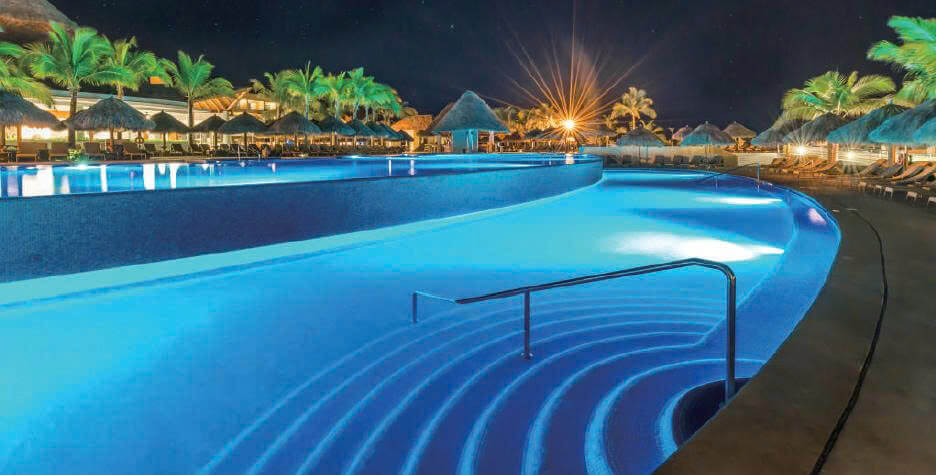 What Is a Pool Light? IP68 Swimming Pool Lighting Guide for Resorts, Hotels and Villas
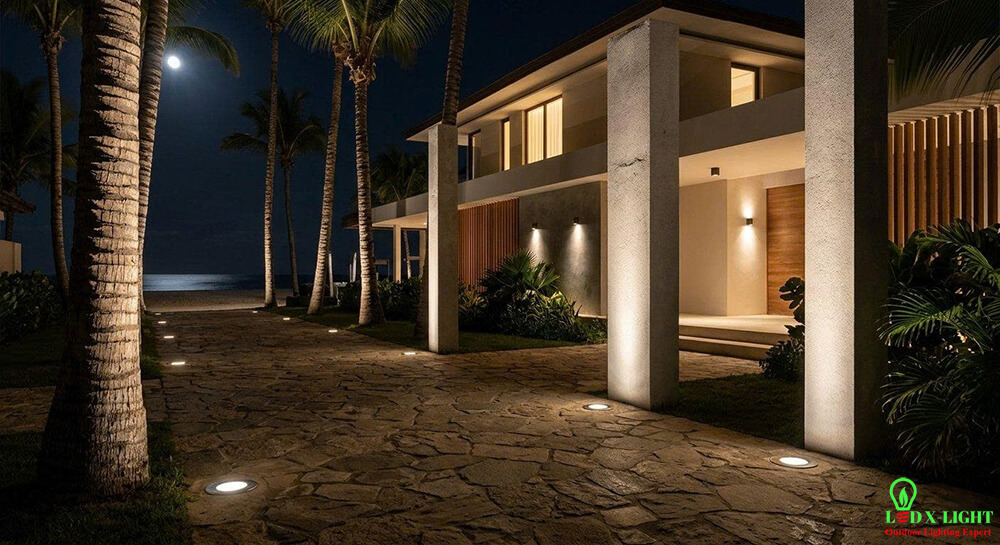 What Is an LED Inground Luminaire? Selection Guide for Resorts, Hotels and Landscape Projects
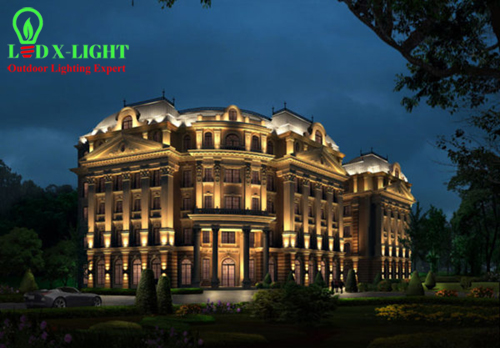 7 Tips about Facade lighting you must know
 A guide to outdoor lighting