304 vs 316L Stainless Steel: Which Is Suitable for Outdoor, Coastal, and Swimming Pool Lighting?
In architectural outdoor lighting design, technical specifications frequently prioritize photometric metrics—such as luminous flux, Color Rendering Index (CRI), and beam distribution—alongside mechanical ingress and impact ratings like
IP67, IP68, and IK10. However, a critical metallurgical variable that dictates the real-world longevity of a luminaire on-site is often oversimplified within Bills of Quantities (BOQ):
the specific alloy composition of the metallic housing and exposed hardware.
For standard inland commercial developments, specifying generic "stainless steel" may suffice. Conversely, for high-end architectural landmarks—such as coastal
luxury resorts, five-star hospitality developments, and large-scale aquatic installations—luminaires face aggressive chemical and atmospheric stressors. Selecting between
304 and 316L stainless steel, or failing to understand where aluminum alloys are the superior engineering choice, directly impacts structural integrity, aesthetic preservation, and long-term maintenance budgets.
This technical guide provides a metallurgical and mechanical framework to assist architects, MEP consultants, lighting designers, and hospitality developers in establishing precise material specifications.
1. Metallurgical Fundamentals: What Is Stainless Steel?
1.1 Definition of Stainless Steel
In metallurgical engineering,
stainless steel is a family of iron-based alloys containing a minimum of
10.5% chromium (Cr) by mass, combined with varying proportions of nickel (Ni), molybdenum (Mo), manganese (Mn), silicon (Si), and controlled carbon (C) levels.
Unlike conventional carbon steel—which reacts with oxygen and moisture to form porous, flaking hydrated iron oxide (rust) that accelerates deep structural decay—stainless steel possesses an intrinsic self-protecting mechanism at the molecular level.
1.2 The Passive Chromium Oxide Layer
The corrosion resistance of stainless steel does not stem from chemical inertness, but from the formation of a
passive layer. When chromium content exceeds 10.5%, surface chromium atoms react instantaneously with ambient oxygen to form a microscopic, invisible
chromium oxide (Cr₂O₃) film approximately 1 to 3 nanometers thick. This dense, non-porous barrier adheres tightly to the underlying metal substrate.
A defining characteristic of this passive film is its
self-healing capability. If a luminaire faceplate suffers minor mechanical abrasion during installation or routine cleaning, exposed chromium atoms immediately react with oxygen in the air or water to regenerate the Cr₂O₃ barrier almost instantly (milliseconds to a few seconds, depending on conditions). However, this passive film is not indestructible; it can be compromised by specific chemical agents, most notably
chloride ions (Cl⁻).
2. Chemical Composition Analysis: 304 vs 316L Stainless Steel
Both 304 and 316L belong to the
austenitic family of stainless steels (AISI 300 series)—the standard classification for architectural lighting due to its non-magnetic properties, high ductility, CNC machinability, and mechanical strength. Despite their visual similarity, subtle differences in alloy chemistry create substantial disparities in environmental resistance.
2.1 Chemical Composition of 304 Stainless Steel (AISI 304 / UNS S30400)
Grade 304 is the baseline austenitic alloy, accounting for over half of global stainless steel production. Its standard composition includes:
- Chromium (Cr): 18.0% – 20.0%
- Nickel (Ni): 8.0% – 10.5%
- Carbon (C): Max 0.08%
- Manganese (Mn): Max 2.0%
- Silicon (Si): Max 0.75%
- Molybdenum (Mo): 0% (Absent)
- Iron (Fe): Balance
Often referred to as "18/8" stainless steel, grade 304 performs reliably in clean inland atmospheres, chemical-free freshwater environments, and dry interior spaces.
2.2 Chemical Composition of 316L Stainless Steel (AISI 316L / UNS S31603)
Grade 316L is designated across industrial specifications as
marine-grade stainless steel. Its formulation introduces two critical metallurgical upgrades over grade 304:
- Chromium (Cr): 16.0% – 18.0%
- Nickel (Ni): 10.0% – 14.0%
- Molybdenum (Mo): 2.0% – 3.0%
- Carbon (C): Max 0.03% (Nearly three times lower than 304)
- Manganese (Mn): Max 2.0%
- Silicon (Si): Max 0.75%
- Iron (Fe): Balance
Note: Composition ranges shown follow ASTM A240 (AISI). EN grades differ slightly (e.g., EN 1.4301: Cr 17.5–19.5%, Ni 8.0–10.5%; EN 1.4404: Cr 16.5–18.5%, Ni 10.0–13.0%, Mo 2.0–2.5%). Actual composition of each batch should be verified against its mill test certificate (MTC).
2.3 The Critical Role of Molybdenum (Mo) and Low Carbon (L-Grade)
Two chemical attributes define the superior performance of 316L in harsh environments:
- The Influence of Molybdenum (2%–3%): Molybdenum is a transition metal that stabilizes the passive chromium oxide film against localized breakdown. When chloride ions attack the metal surface, molybdenum inhibits localized dissolution of the oxide layer, significantly elevating the PREN (Pitting Resistance Equivalent Number). While grade 304 exhibits a PREN of roughly 18–20, grade 316L achieves a PREN of 24–26, establishing a robust chemical barrier against saltwater and pool sanitizers.
- The Significance of the "L" Designation (Low Carbon ≤ 0.03%): Manufacturing outdoor luminaire housings and trim rings frequently requires TIG or laser welding. In standard 304 stainless steel (up to 0.08% carbon), exposure to welding temperatures (450°C–850°C) causes carbon to bond with chromium, forming chromium carbides (Cr₂₃C₆) along grain boundaries. This phenomenon—known as sensitization—depletes free chromium adjacent to the weld, breaking the passive film and causing rapid intergranular rusting. By restricting carbon content to ≤ 0.03%, 316L eliminates carbide precipitation, ensuring welded joints retain full corrosion resistance.
3. Corrosion Mechanisms in Outdoor, Coastal, and Aquatic Lighting
Understanding why grade 304 fails in coastal resorts and swimming pools requires examining the electrochemical corrosion processes occurring on the luminaire exterior.
3.1 Chloride Attack
In marine and chemically treated aquatic environments,
chloride attack is the primary catalyst for stainless steel degradation. Chloride ions (Cl⁻) possess a small atomic radius, high mobility, and a strong negative charge. When deposited on a metal surface, Cl⁻ ions penetrate microscopic defects in the Cr₂O₃ passive layer, displacing oxygen atoms and bonding with iron and chromium ions to form soluble metal chlorides (such as FeCl₂ and CrCl₃). This localized breakdown prevents passive film regeneration, initiating a self-sustaining electrochemical corrosion cycle.
3.2 Pitting Corrosion
Pitting corrosion is a highly localized form of structural attack. Rather than uniform surface rusting, pitting concentrates at microscopic points where chloride ions breach the passive film. Metal dissolves rapidly inward, creating narrow, deep cavities beneath the surface.
- Impact on Luminaires: Initially, a 304 stainless steel trim ring displays minor orange-brown discoloration known as tea staining. Beneath these surface marks, deep pits penetrate the metal thickness. Staining can appear within months in a coastal climate; depending on material thickness and exposure, pitting can compromise gasket grooves or perforate the housing within roughly 1–2 years, allowing water to enter the LED chamber.
3.3 Crevice Corrosion
Crevice corrosion occurs within tight, oxygen-depleted mechanical clearances—such as the interface between a stainless steel bezel and tempered glass, beneath socket-head cap screws, or between a ground-recessed luminaire and its polymer mounting sleeve.
Chloride-rich water enters these microscopic gaps (often tens of micrometers wide), while ambient oxygen cannot diffuse inward to maintain the Cr₂O₃ passive layer. Concurrently, chloride and hydrogen ion (H⁺) concentrations spike inside the crevice, creating a localized, highly acidic, chloride-rich environment. This accelerates corrosion at fastener threads and gasket seats, seizing bolts during maintenance or compromising IP67/IP68 waterproof seals.
4. Environmental Stress Analysis
4.1 Marine Environments and Coastal Resorts
Beachfront hospitality developments typically fall under atmospheric corrosivity categories C4 to C5 (as classified in ISO 9223 and ISO 12944). Coastal air carries high concentrations of
marine aerosol (airborne salt mist) carried inland for several kilometers or more, depending on terrain and wind direction.
During daylight hours, solar radiation evaporates moisture from luminaire surfaces, leaving concentrated sodium chloride (NaCl) crystals adhered to the metal. At night, condensation dissolves these crystals into a highly conductive, chloride-rich electrolyte solution. For low-elevation fixtures like inground uplights, this daily evaporation-condensation cycle can degrade 304 stainless steel within months.
A widespread misconception in MEP specification is that inland freshwater pools do not require 316L stainless steel. To maintain water clarity and meet public health sanitation codes, commercial swimming pools rely on aggressive oxidizing disinfectants:
- Chlorine Sanitation: Whether dosed via chlorine gas, sodium hypochlorite (NaClO), or TCCA tablets, dissolution releases hypochlorous acid (HOCl) and free chloride ions (Cl⁻). Commercial pools typically maintain roughly 1–3 ppm free chlorine, depending on the applicable code and pool type, while periodic shock treatments spike concentrations to 10–20 ppm—creating an oxidizing environment that can be as aggressive to grade 304 as seawater.
- Saltwater Chlorination Pools: Increasingly common in five-star resorts for guest comfort, these systems dissolve purified sodium chloride directly into pool water at concentrations of 3,000 to 4,500 ppm (roughly one-tenth seawater salinity) to generate chlorine via electrolysis. Continuous 24/7 immersion in warm, chlorinated saltwater can quickly degrade 304 stainless steel luminaires, with rust and coating failure appearing within months to roughly two years depending on salinity, water temperature, and surface quality.
5. Comprehensive Technical Comparison: 304 vs 316L Stainless Steel
| Technical Criterion |
304 Stainless Steel (AISI 304 / UNS S30400) |
316L Stainless Steel (AISI 316L / UNS S31603) |
| Industry Designation |
Standard Austenitic (18/8) |
Marine-Grade Austenitic |
| Chromium (Cr) Content |
18.0% – 20.0% |
16.0% – 18.0% |
| Nickel (Ni) Content |
8.0% – 10.5% |
10.0% – 14.0% |
| Molybdenum (Mo) Content |
0% (None) |
2.0% – 3.0% (Chloride resistance) |
| Carbon (C) Content |
Max 0.08% |
Max 0.03% (Prevents weld sensitization) |
| PREN Value |
~ 18 – 20 |
~ 24 – 26 |
| Pitting Corrosion Resistance |
Moderate (Susceptible to chlorides/chlorine) |
Very good (far better chloride resistance than 304) |
| Crevice Corrosion Resistance |
Poor in submerged fasteners & gasket grooves |
High (Maintains integrity in tight clearances) |
| Recommended Environments |
Dry inland zones (> 10 km from coast), chemical-free freshwater |
Coastal resorts, islands, chlorinated/saltwater pools, submerged zones |
| Initial Equipment Cost (CAPEX) |
Baseline (100%) |
+15% to +25% depending on luminaire geometry (indicative) |
| Expected Field Lifespan |
Months to ~2 years (coastal); 3–5 years (inland) (indicative) |
Designed for 10–15 years with correct installation and maintenance (indicative) |
6. Financial Engineering: CAPEX, Lifespan, and Long-Term ROI
During value engineering (VE) reviews, contractors frequently propose substituting 316L with 304 stainless steel to reduce initial procurement costs. From an asset management and Life-Cycle Costing (LCC) perspective, this substitution introduces severe financial liabilities.
6.1 Initial Capital Expenditure (CAPEX) Differential
While raw 316L alloy stock costs 25%–35% more than 304 (indicative; depends on alloy surcharges) due to higher nickel and molybdenum content, metallic trim components represent only a fraction of a complete architectural luminaire's bill of materials (which includes high-efficacy LED chips, constant-current drivers, precision optics, and CNC machining). Consequently, specifying a finished luminaire with 316L components typically increases initial CAPEX by only
15% to 25%.
6.2 Hidden Operational Expenditures (OPEX)
Deploying 304 stainless steel in coastal or aquatic applications results in seal failure within a few months to roughly two years, triggering compounding OPEX costs:
- Full Hardware Replacement: 100% repurchase cost for failed luminaires.
- Civil Demolition and Reinstallation: Replacing corroded inground luminaires requires breaking natural stone paving or concrete hardscapes. For recessed pool lights lacking adequate service cable loops or suffering niche corrosion, operators must drain part or all of the pool water, incurring massive water refill, chemical rebalancing, and facility downtime costs.
- Brand Reputation Erosion: Rust streaks bleeding onto white stone walkways or infinity pool tiles directly degrade the visual standards expected by luxury hospitality guests.
6.3 Long-Term Return on Investment (ROI)
An incremental 15%–25% upfront investment (indicative) in 316L stainless steel targets 10 to 15 years of housing service life, aligning with the 50,000-hour operational lifespan of premium LED engines. Over a 10-year hospitality operating cycle, the total cost of ownership (TCO) of 304 fixtures that require periodic replacement can be several times higher than that of 316L fixtures specified from the start (equipment, labor, and operational downtime); the actual difference depends on project scale and should be calculated from real quotations.
7. Industry Engineering Reality and Accurate Material Application
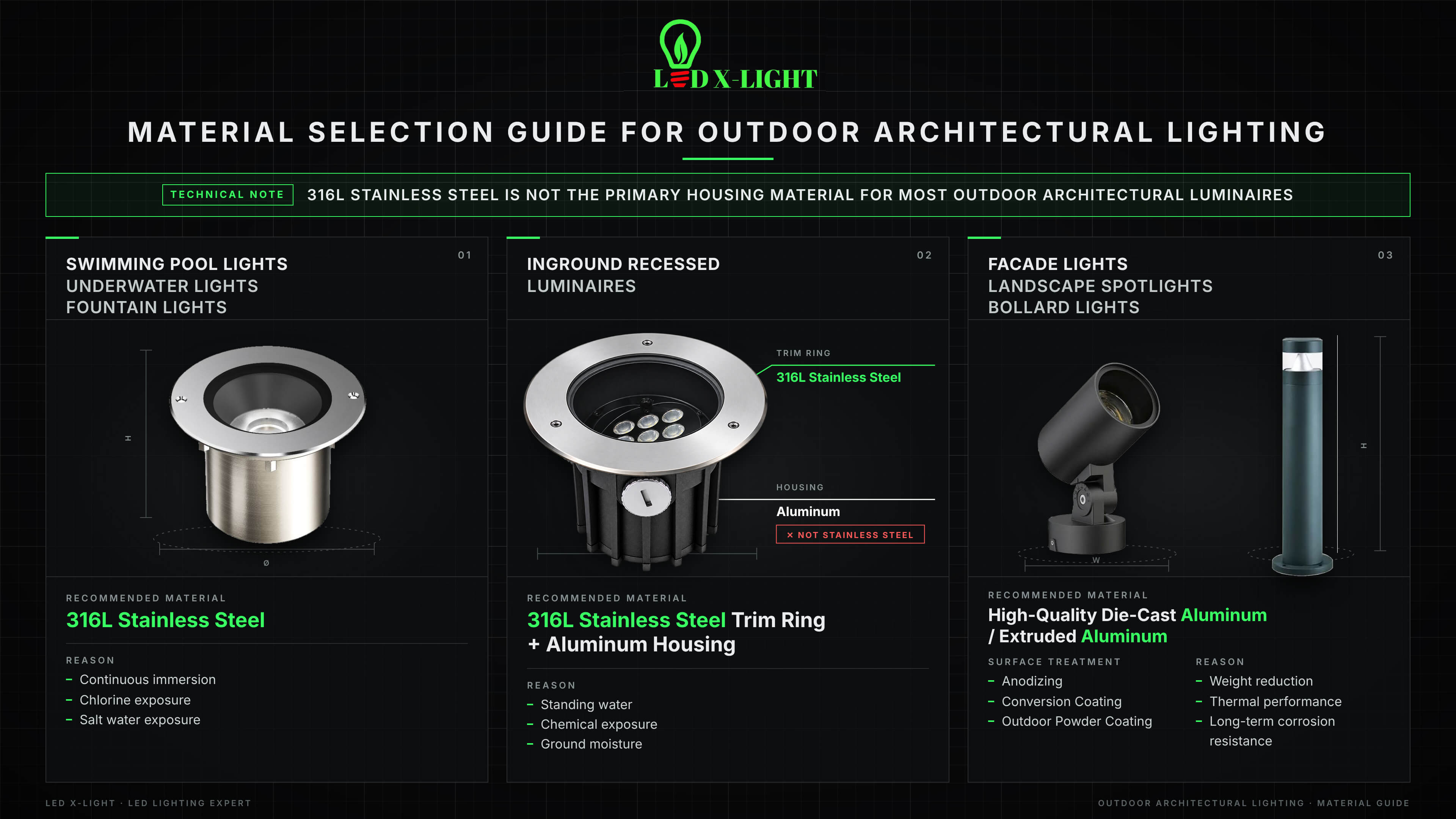
A widespread misconception in exterior lighting specification is that all high-end outdoor luminaires must utilize 304 or 316L stainless steel as their primary body material. In professional European architectural lighting manufacturing, stainless steel is
not the dominant housing material for most above-grade exterior fixtures.
7.1 Standard Material Architecture of Exterior Luminaires
For the vast majority of architectural outdoor luminaires—including
Bollard Lights, Garden Lights, Landscape Spotlights, Linear Wall Washers, Facade Lights, and Exterior Wall Lights—the primary housing material is
High-Pressure Die-Cast Aluminum or
Extruded Aluminum. Aluminum offers superior thermal conductivity (approximately 90–110 W/m·K for pressure die-cast alloys and about 200 W/m·K for 6063 extrusions, versus ~15–16 W/m·K for stainless steel, i.e., roughly 6 to more than 10 times higher), which is essential for dissipating heat from high-output LED arrays and preserving chip longevity.
The standard material distribution across a professional exterior luminaire comprises:
- Main Body / Housing: Pressure die-cast aluminum alloy (preferably a low-copper grade, per the manufacturer's specification) or 6063-T5 extruded aluminum.
- Fasteners and Hardware: Stainless steel (304 for dry inland zones; 316L for coastal/marine environments).
- Mounting Brackets: Powder-coated architectural aluminum or heavy-gauge stainless steel.
- Cable Glands: Nickel-plated brass or stainless steel.
7.2 Why Aluminum Quality and Surface Treatment Matter More Than Stainless Steel Grade
For aluminum-bodied luminaires installed in coastal resorts, real-world durability depends not on whether the housing is stainless steel, but on
base alloy purity and
multi-stage surface protection:
- Virgin Aluminum vs. Recycled Aluminum Impurities: Low-cost recycled aluminum contains elevated levels of heavy metal impurities, particularly copper (Cu) and iron (Fe). In salt-laden coastal air, internal copper and iron particles form micro-galvanic cells within the metal substrate, initiating sub-surface corrosion that blisters and peels powder coatings within months. High-quality architectural luminaires prefer virgin aluminum with tightly controlled copper and iron content to reduce the risk of internal galvanic corrosion.
- Casting Porosity: Advanced vacuum die-casting produces a dense, non-porous grain structure. High porosity in inferior castings traps moisture and salt crystals beneath the finish, causing premature coating failure.
- Surface Pretreatment: Prior to coating, aluminum housings should undergo degreasing, chemical cleaning, and a chrome-free (e.g., zirconium-based) conversion coating to create an adhesion-promoting base for the powder coat. For extruded aluminum, anodizing can add a hard aluminum oxide layer.
- Architectural Outdoor Powder Coating Systems: Fixtures must be finished with pure UV-resistant polyester powder coatings (meeting Qualicoat Seaside or AAMA 2604/2605 standards) applied at a controlled film thickness of 60 µm to 100 µm. This barrier isolates the aluminum chassis from salt spray and acid rain.
7.3 Precise Scope of 316L Stainless Steel in Architectural Lighting
Rather than specifying 316L universally, lighting engineers concentrate
marine-grade 316L stainless steel on four specific application groups exposed to continuous immersion, aggressive chemicals, or standing water:
- Swimming Pool Lights (IP68): All faceplates, trim rings, housing shells (for all-steel models), and fasteners must be 316L to endure continuous 24/7 submersion in chlorinated or saltwater pools.
- Underwater Lights: Submersible projectors deployed in ecological lagoons, reflecting pools, and water features.
- Fountain Lights: Luminaires subjected to continuous kinetic water jets, high dissolved oxygen levels, and algaecide treatments.
- Ground-Recessed Luminaires (Inground Lights): Specifically the exposed trim ring (bezel) and surface fasteners, which sit flush with paving and endure standing rainwater, floor-cleaning chemicals, landscape fertilizers, and evaporating salt crystals. (The buried lower housing remains surface-treated die-cast aluminum housed within a polymer mounting sleeve for thermal dissipation).
(Note on Exterior Accessories: For aluminum-bodied luminaires installed within 10 km of the coastline
, all external fasteners, locking clips, and cable glands should also be specified in 316L stainless steel paired with anti-seize isolation paste to prevent galvanic corrosion).
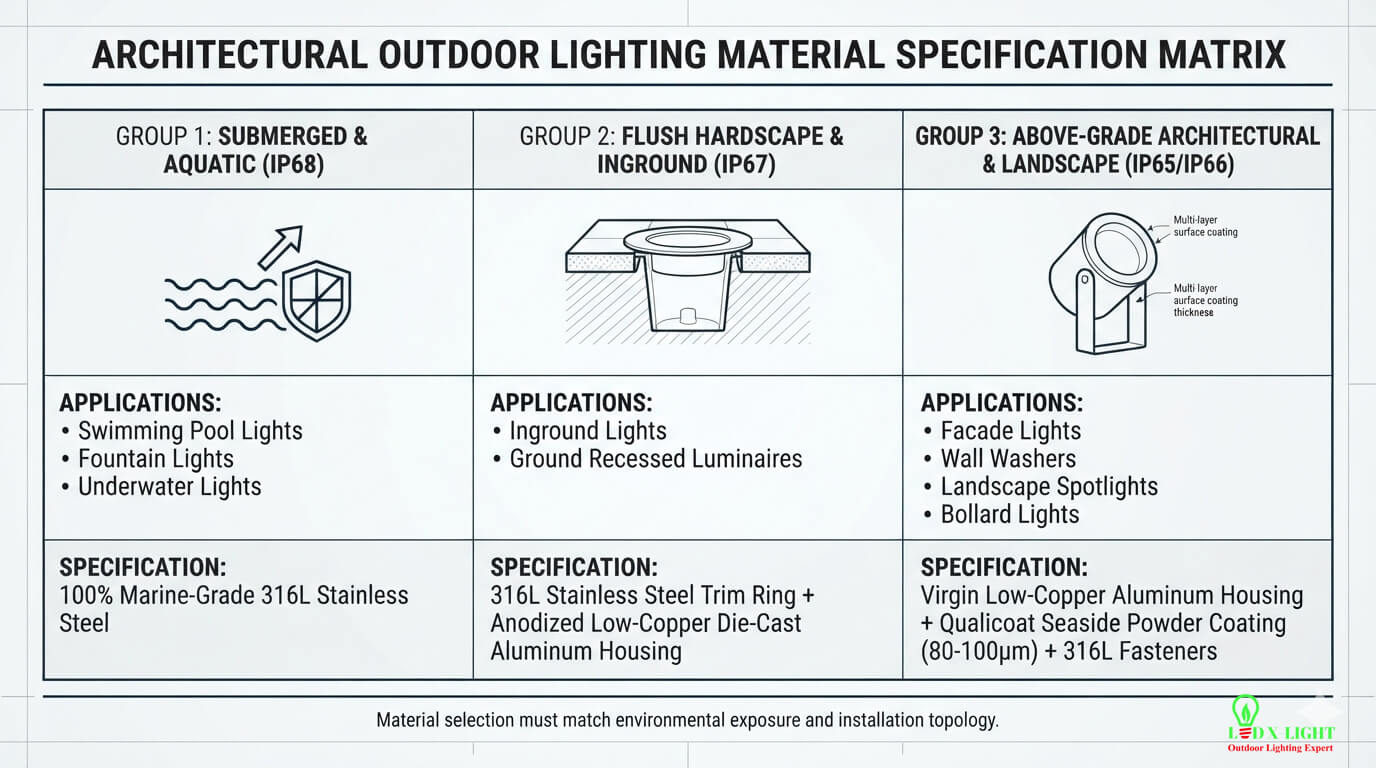
8. Material Specification Matrix by Project Typology
| Project Typology |
Luminaire Category |
Primary Housing Material |
Exposed Trim & Hardware |
Mandatory Surface Treatment & Standards |
| Coastal Resorts & Beachfront Hotels (within 10 km of the coast) |
Swimming Pool, Fountain & Underwater Lights (IP68) |
316L Stainless Steel (or chemical-resistant polymer) |
100% 316L Stainless Steel (Trim, body, fasteners) |
Electrochemical passivation; full chlorine & saltwater resistance |
| Coastal Resorts & Beachfront Hotels (within 10 km of the coast) |
Inground & Ground-Recessed Luminaires (IP67) |
Virgin die-cast aluminum, low-copper grade (thermal management) |
Heavy-Gauge 316L Trim Ring & 316L Fasteners |
Conversion-coated + marine-grade powder-coated housing inside polymer sleeve |
| Coastal Resorts & Beachfront Hotels (within 10 km of the coast) |
Landscape Spotlights, Bollards, Wall & Facade Lights |
Virgin Die-Cast / Extruded Aluminum |
316L Stainless Steel fasteners, brackets & cable glands |
Chrome-free conversion coating + 80–100 µm Qualicoat Seaside powder coat |
| Inland Luxury Hotels & Urban Developments (beyond 10 km from the coast) |
Swimming Pool & Fountain Lights (IP68) |
316L Stainless Steel |
100% 316L Stainless Steel trim & fasteners |
Mandatory 316L specification to resist chlorine pool sanitizers |
| Inland Luxury Hotels & Urban Developments (beyond 10 km from the coast) |
Inground Lights (IP67) & Above-Grade Landscape Lights |
Die-Cast / Extruded Aluminum |
316L Trim (wet zones) or 304 Trim (dry zones); 304/316 fasteners |
UV-resistant polyester powder coating, minimum 60–80 µm thickness |
9. Technical Frequently Asked Questions (FAQ)
Q1: Why did our newly installed pool lights develop orange rust spots within four months despite being specified as "stainless steel"?
- Answer: This phenomenon—known as tea staining—is the early stage of pitting corrosion. The most common cause is that the actual material is 304 rather than 316L; other causes can include an unpassivated surface, weld zones, crevices, or very high chloride concentrations. Check the batch's mill test certificate (MTC). Chlorine sanitizers and saltwater chlorination systems release free chloride ions that rapidly breach the passive film of grade 304. If the material is confirmed to be 304, replace the trim assemblies with certified 316L stainless steel (containing 2%–3% molybdenum).
Q2: How can site engineers verify 304 vs 316L stainless steel during field inspections?
- Answer: Visually, 304 and 316L are identical, and both are non-magnetic austenitic alloys. For rapid field screening, use a molybdenum test kit following the kit manufacturer's instructions (results are indicative only) or a handheld XRF/PMI alloy analyzer. For commercial contracts, always require a Mill Test Certificate (MTC EN 10204 3.1) verifying batch chemistry.
Q3: If a resort is located 3 km inland behind a tree line, can we specify 304 stainless steel trim rings for inground lights to save budget?
- Answer: No. Airborne marine aerosols can travel well inland; the affected range depends on terrain, wind direction, and elevation, and in practice projects within about 10 km of the coast are treated as coastal. Furthermore, flush-mounted inground luminaires trap evaporated salt crystals and dew condensation. Using 304 trim rings 3 km from the coast can lead to tea staining and gasket degradation within roughly 1–2 years, resulting in civil demolition costs far exceeding initial material savings.
Q4: If a hotel swimming pool uses UV or Ozone sanitation to minimize chlorine, is 316L stainless steel still mandatory?
- Answer: Yes. Commercial pool codes still require maintaining a free chlorine residual for continuous disinfection, per the applicable local standard. Additionally, dissolved ozone is a powerful oxidizing agent. Therefore, 316L stainless steel remains the recommended choice for all submerged hardware.
Q5: What causes galvanic corrosion when stainless steel screws are threaded into an aluminum luminaire housing?
- Answer: When two dissimilar metals with different electrode potentials (aluminum and stainless steel) contact each other in the presence of an electrolyte (saltwater or rain), they form a galvanic cell. Aluminum acts as the anode and corrodes faster around the screw threads, blistering the powder coat and seizing the fastener. Professional luminaires reduce this risk by using 316L fasteners (better chloride resistance than 304, so the fasteners themselves last longer in marine environments) together with anti-seize compound or non-conductive PTFE/nylon washers at the contact points; isolation is needed with either stainless grade 316L fasteners (which exhibit better galvanic compatibility with anodized aluminum) with anti-seize isolation paste or non-conductive Teflon/nylon washers.
Q6: Does 316L stainless steel require periodic maintenance in coastal environments?
- Answer: Yes. While 316L offers superior corrosion immunity, thick accumulations of dried sea salt, calcium scale, or dirt can shield the metal from ambient oxygen, inhibiting regeneration of the Cr₂O₃ passive layer. Standard hospitality maintenance protocols recommend rinsing exposed 316L trim rings with clean freshwater every 3 to 6 months to help preserve their finish over the long term.
In sustainable architectural design, the true value of a hospitality or commercial development is measured by the long-term durability of its material details. Establishing an accurate luminaire specification does not mean over-specifying a single expensive alloy everywhere, but rather
advises on material selection along these principles for each project; specific material specifications are stated in each product's technical documentation. Landmark developments—including
—reflect our hands-on project experience in combining sound material selection, marine-grade surface treatment, and architectural lighting design.
Referenced standards: ASTM A240 (stainless steel plate, sheet and strip); EN 10088 (stainless steels); ISO 9223 (classification of atmospheric corrosivity); ISO 12944 (corrosion protection by protective paint systems); EN 10204 (inspection documents for metallic products).
Prepared by: LED X-LIGHT Application Engineering. Updated: 16/11/2026.


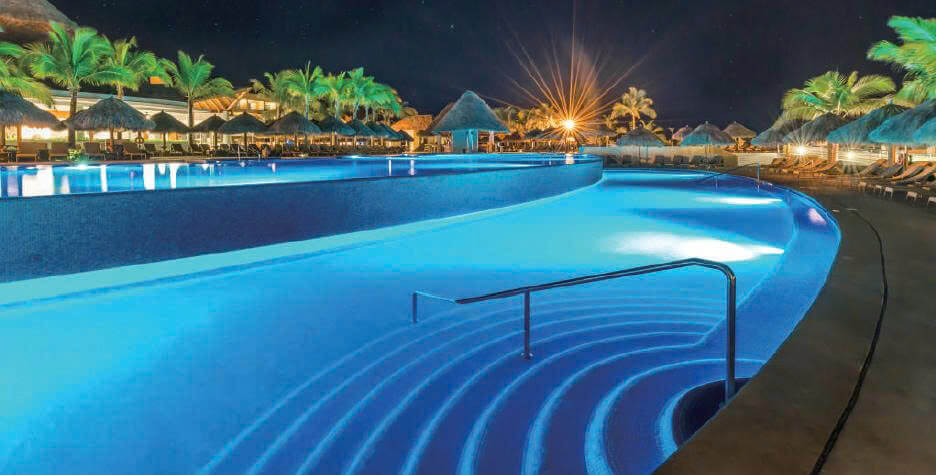 What Is a Pool Light? IP68 Swimming Pool Lighting Guide for Resorts, Hotels and Villas
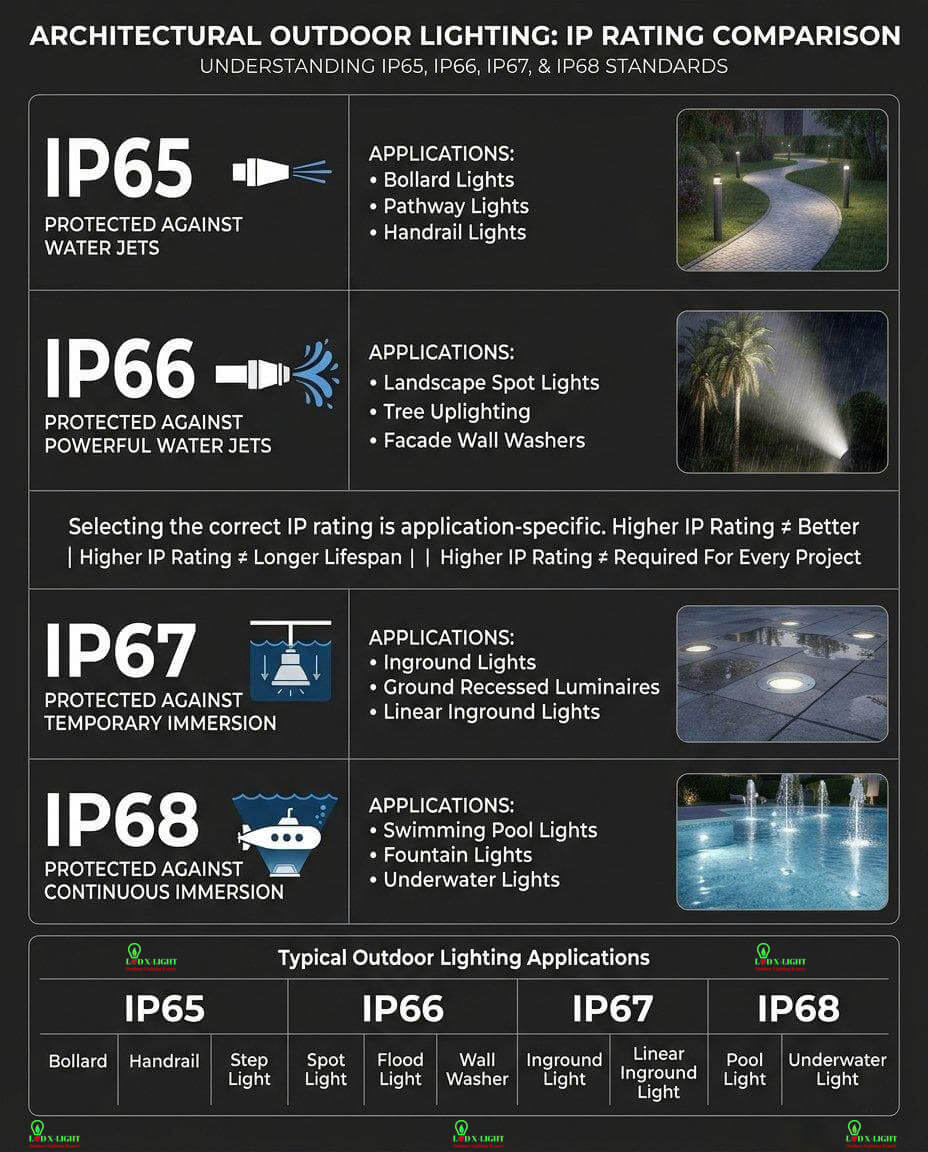 IP65 vs IP66 vs IP67 vs IP68: Outdoor Lighting Ingress Protection Guide
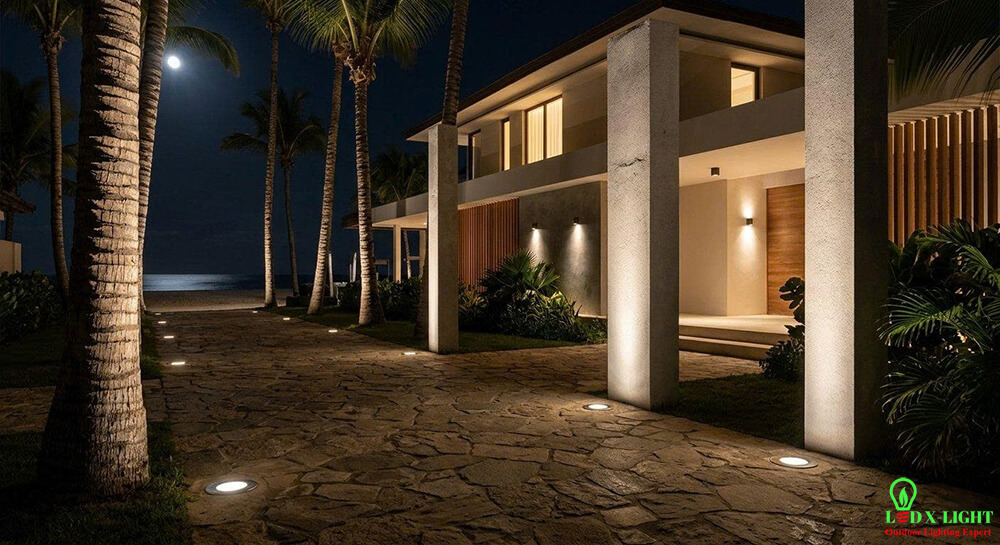 What Is an LED Inground Luminaire? Selection Guide for Resorts, Hotels and Landscape Projects
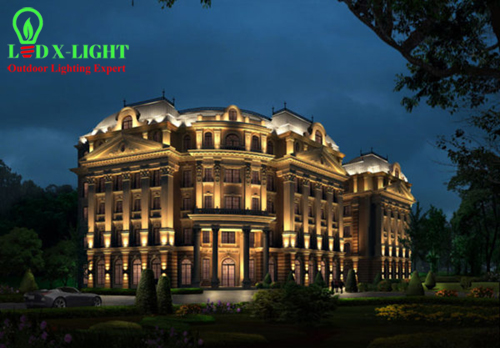 7 Tips about Facade lighting you must know
 A guide to outdoor lighting